valid No Comments

Why Process Cooling Makes or Breaks Your Cycle Times: Chillers and Temperature Control Units Explained

In plastics manufacturing, cooling is not just a utility. It is part of the production process, and it can determine how quickly you can make a part, how consistently that part meets specification, and how much you spend on energy and scrap.

If mold cooling is too slow or inconsistent, you may be waiting longer between cycles, struggling with warped or blemished parts, or adjusting machine settings to compensate. The right process cooling setup helps you remove heat reliably and gives your operators a more stable process to manage.

Hirate America supplies Thermal Care process cooling equipment for plastics manufacturing. We can help you understand the options and plan a solution that fits your machines, molds, facility, and future production needs.

Why cooling affects cycle time and part quality

During molding, heat must be removed from the plastic so the part can hold its shape when it leaves the mold. In injection molding, the part needs to be sufficiently solid before ejection. In blow molding, the formed container needs to cool enough to retain its shape and meet quality requirements.

If cooling is inadequate or uneven, you may see:

  • Longer cycles while operators wait for parts to cool enough to eject.
  • Warpage, shrinkage variation, sink marks, or parts sticking in the mold.
  • Inconsistent results across cavities or production runs.
  • More troubleshooting, rejected parts, and unplanned downtime.

A faster cycle is useful only if the finished part still meets requirements. Pushing coolant temperatures too low without considering the resin, mold design, flow, and process can create other problems. The aim is controlled, uniform heat removal, not simply the coldest water possible.

Cooling demand also depends on the part and process. Wall thickness, resin properties, mold temperature, and cooling-channel design all play a role. Toray’s overview of molding cycle time is a useful reference for understanding how cooling fits into the overall cycle.

Thermal Care central process chiller for a plastics plant

Central chillers, portable chillers, and temperature control units

These equipment types all manage heat, but they serve different jobs. Choosing among them starts with understanding what needs to be cooled, how many processes share the load, and how precise the temperature must be.

1. Central chillers: one cooling source for many users

A central chiller produces chilled water for distribution around the plant. It can serve multiple molding machines and other process loads through a piping and pumping system.

Central chillers are often a good fit when:

  • Several machines need cooling in a similar temperature range.
  • Your cooling demand is substantial or expected to grow.
  • You want a coordinated plant-wide system rather than individual chillers beside each machine.
  • Your facility can support the piping, pumps, controls, and space the system requires.

The benefit is centralized management of a shared cooling resource. But a central system needs thoughtful design: equipment capacity, flow, pressure, distribution, and the mix of connected loads all matter. A chiller can show the right supply temperature and still fail to deliver the required flow at a mold.

2. Portable chillers: cooling where you need it

Portable chillers are packaged units designed to provide cooling close to a machine or process. They can be useful for a standalone machine, a temporary need, a new production area, or an application with different cooling requirements from the rest of the plant.

They may make sense when you need:

  • A flexible, relatively self-contained solution.
  • Cooling for a new machine before a central loop is expanded.
  • A dedicated source for one process or a specific operating temperature.
  • A way to add capacity without redesigning the whole plant system.

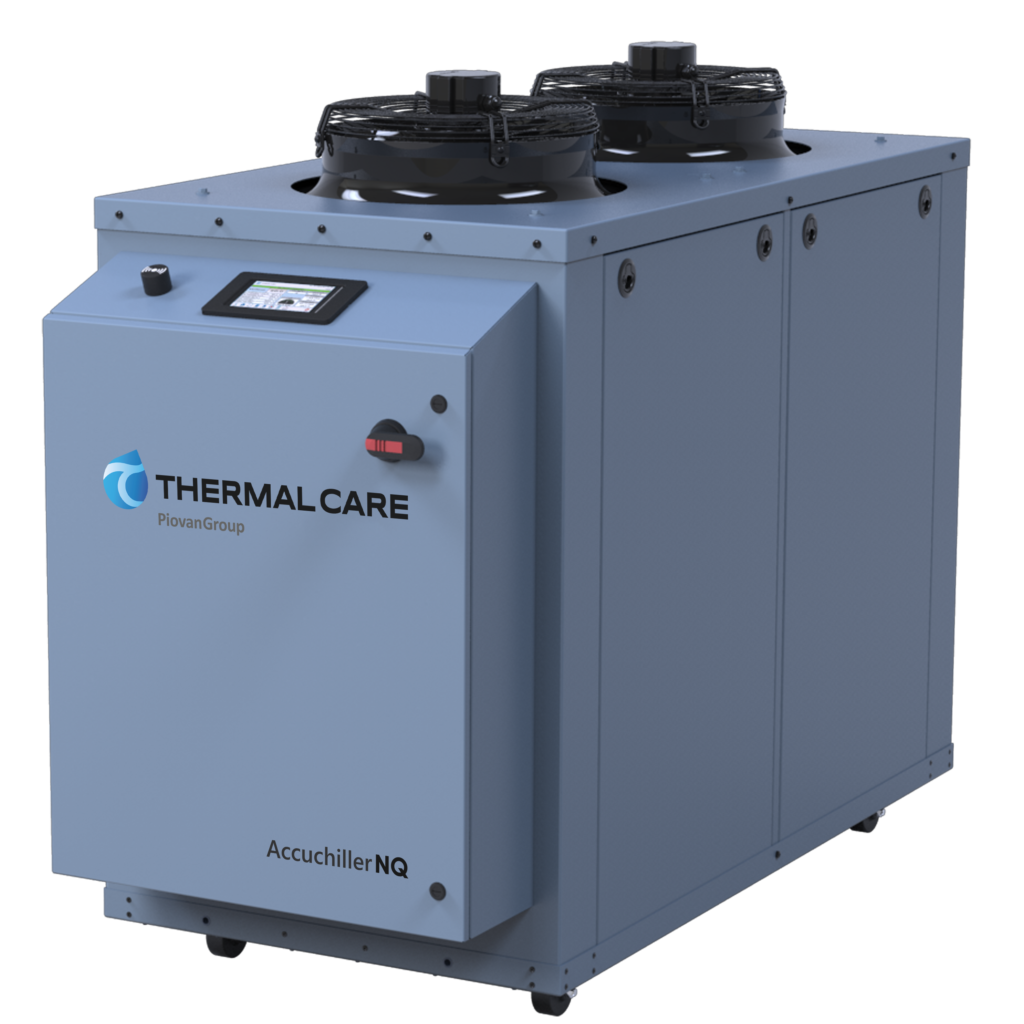
Portable does not mean one-size-fits-all. You still need to confirm cooling capacity, pump flow, pressure, operating conditions, and the actual load. Thermal Care’s AccuChiller NQ specifications show how available models differ in capacity and pump performance.

Thermal Care AccuChiller NQ portable chiller

3. Temperature control units: precise mold or process temperature

Temperature control units (TCUs), often called thermolators, manage the temperature of a process circuit, such as a mold. Unlike a chiller, which primarily removes heat to provide chilled fluid, a TCU can heat the circulating fluid as well as cool it. That lets it maintain a target temperature when the application calls for tighter control or an elevated setpoint.

A TCU may be appropriate when:

  • Your mold or process requires a controlled temperature rather than simply the coldest available water.
  • You need to bring a mold to operating temperature at startup.
  • Temperature stability is important to part appearance, dimensions, or repeatability.
  • Different molds or processes need different temperature settings.

The choice between water and oil, and the required operating range, depends on the application. Thermal Care’s process cooling equipment page lists central chiller systems, portable chillers, and water and oil mold temperature controllers.
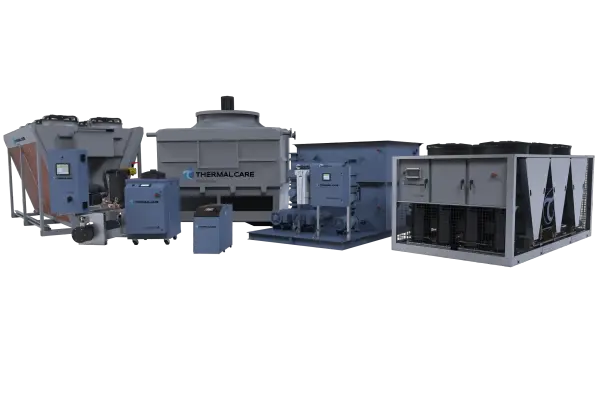
Thermal Care process cooling equipment for plastics manufacturing

When should you use each option?

A simple starting point is to consider whether you need to make chilled water, deliver cooling to a particular machine, or actively control a mold temperature.

  • Consider a central chiller when multiple processes share a compatible cooling requirement and a plant-wide loop is practical.
  • Consider portable chillers when cooling is needed for an individual machine, a temporary load, an expansion, or a process with a distinct requirement.
  • Consider a TCU or thermolator when the mold needs active heating and cooling or when a tightly controlled mold temperature is central to process consistency.

Some facilities need more than one type. A chiller may supply cooling to a plant loop, while a temperature control unit manages the mold circuit. A new or growing operation might begin with a portable chiller and plan for a central system as production expands. The right answer depends on your loads, layout, operating schedule, and goals, not just the equipment label.

How to get more from the cooling equipment you have

Before assuming you need a bigger chiller, check whether the cooling is reaching the process effectively. A practical review can include:

  1. Compare supply and return temperatures. The difference can help show how much heat the process is removing, but it should be considered alongside the application’s requirements.
  2. Check flow and pressure at the machine or mold. Restrictions, dirty filters, air, or undersized pumps can limit performance even when the chiller is operating.
  3. Look for uneven cooling. Hot spots or unbalanced mold circuits can keep you from safely reducing cooling time.
  4. Review maintenance and operating conditions. Fouled heat exchangers, blocked strainers, poor airflow, and changing ambient conditions can affect capacity.
  5. Track production outcomes. Compare cycle time, part quality, scrap, and energy use before and after process adjustments.

This is where a properly selected PLC control, alarms, and clear supply-and-return temperature monitoring can help operators spot changes sooner. The Thermal Care NQ documentation, for example, describes temperature displays, deviation alarms, and options for variable-speed compressor control. Those features can support visibility and part-load efficiency, but the best configuration depends on your specific operating profile.

Build the ROI around your plant’s numbers

The financial case for process cooling is specific to each facility. A shorter cycle can create more available machine time, while stable cooling may reduce scrap and troubleshooting. Energy savings depend on the existing equipment, load profile, operating hours, and system design.

To estimate potential return, compare:

  • The current and target cycle time, while confirming part quality is maintained.
  • Scrap and rework costs linked to cooling-related variation.
  • Current cooling energy use and expected equipment operating costs.
  • Installation, piping, maintenance, and production-disruption costs.

A simple payback estimate is project cost ÷ annual net savings. Use your own production and utility data rather than relying on a generic payback period. A cooling review can help identify which savings are realistic before you invest.

A personal partner for your cooling project

Process cooling touches machines, molds, piping, controls, utilities, and production targets. If you are new to manufacturing, or adding capacity to an established plant, it can be difficult to know where the cooling system ends and the process problem begins.

Hirate America can walk you through the options, from individual portable chillers and temperature control units to integrated, turn-key process cooling plans. As one Hirate customer, Larry, put it: “There is incredible peace of mind knowing that you’re in the hands of professionals.”

Explore our cooling and temperature control solutions or get in touch with Hirate America to discuss an upcoming project. We’ll help you evaluate the application and identify a practical path forward, without pressure.
valid

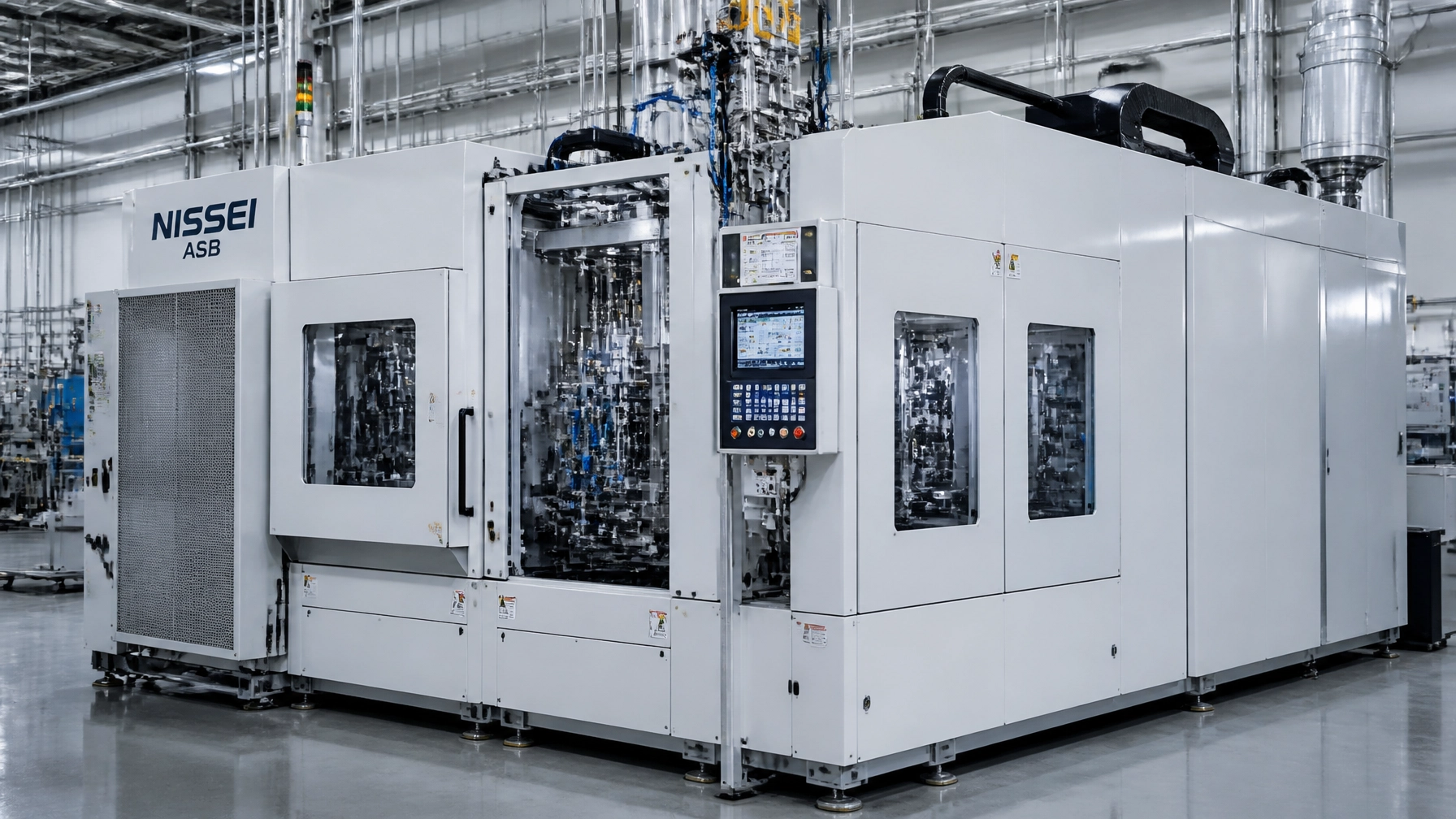
Why Nissei ASB Remains the Gold Standard in Injection Stretch Blow Molding (ISBM)

In the competitive world of plastics manufacturing, “good enough” is a recipe for falling behind. If you are looking to scale your production, reduce your carbon footprint, and: most importantly: slash your operating costs, you need equipment that does more than just blow bottles. You need a system that integrates the entire process into a single, high-efficiency heartbeat.

This is exactly why Nissei ASB has remained the undisputed industry leader in Injection Stretch Blow Molding (ISBM) for decades. At Hirate America, we’ve spent years helping manufacturers build facilities from the ground up, and when it comes to ISBM, Nissei ASB is our gold standard.

In this guide, we’ll walk you through why Nissei ASB technology is the key to unlocking higher ROI, and how our partnership ensures you get a “plug and play” solution that saves you money on day one.


The “All-in-One” Advantage: 1-Step and 1.5-Step Technology

The traditional “2-step” process involves molding preforms in one machine, cooling them, transporting them (often to a different facility), and then reheating them in a separate blow molder. This adds labor, storage costs, and a massive amount of wasted energy.

Nissei ASB pioneered the 1-step process. This “All-in-One” approach integrates injection, conditioning, stretch-blow, and ejection into a single machine.

The ASB one-step injection stretch blow molding process cycle

Why the 1-Step Process Wins:

  • Zero Contamination: Since the preform never leaves the machine, there is no risk of dust or scratching during transport. This is vital for pharmaceutical and cosmetic applications.
  • Precision Control: Because the preform is still warm from the injection stage, the “conditioning” station can perfectly distribute heat. This results in superior wall thickness and clarity.
  • Smaller Footprint: You can reclaim up to 70% of your floor space by eliminating preform storage and separate machinery.

For high-volume producers, Nissei ASB’s 1.5-step technology (found in the PF Series) offers the best of both worlds: combining the speed of 2-step with the quality and compact nature of 1-step. It’s a game-changer for those looking to hit 18,000+ bottles per hour without the massive overhead of a traditional line.


Sustainability That Actually Saves You Money

The industry is moving toward “Circular Economy” goals, and Nissei ASB is leading the charge with their All-in-One Sustainable Bottle Solutions. This isn’t just marketing: it’s a technical framework designed to help you use 100% recycled PET (rPET) without sacrificing quality or speed.

100% rPET Capability

Modern consumers demand recycled materials. Nissei ASB machines are optimized to handle the thermal variations of rPET, ensuring that a 13-gram water bottle made from 100% recycled resin looks and performs exactly like one made from virgin material.

Extreme Lightweighting

Every gram of resin you save is direct profit. Nissei’s precise conditioning allows for extreme lightweighting: reducing material usage by up to 10-15% while maintaining the structural integrity needed for capping and stacking.

Diverse range of plastic packaging solutions achievable through ASB machinery


Spotlight: The ASB-70DPH and the Hybrid ASB-50E

When we consult with clients at Hirate America, two machines frequently stand out for their versatility and ROI.

1. The ASB-70DPH: The Versatile Workhorse

This is a mid-range, four-station machine that is arguably the most versatile ISBM platform on the market. It can produce everything from tiny 5ml pharmaceutical vials to massive 10L jars.

  • Best For: Manufacturers who need the flexibility to run multiple products on one line.
  • ROI Factor: Rapid changeovers and a proven, reliable design mean less downtime and more billable production.

2. The ASB-50E: The Hybrid-Electric Revolution

The ASB-50E takes Nissei’s legendary 1-step process and pairs it with hybrid-electric drives. This is the ultimate choice for those looking to slash utility bills.

  • Energy Savings: Electric drives significantly reduce power consumption compared to fully hydraulic systems.
  • Quiet & Clean: Perfect for medical or food-grade environments where noise and oil mist must be minimized.
  • Precision: Electric motion control ensures repeatable “visually perfect” molding every single cycle.

Designing for Success: Beyond the Standard Bottle

One of the reasons Nissei ASB stays ahead is its ability to handle complex geometries that stop other machines in their tracks. Whether you are looking for ultra-narrow necks (as small as 2.5mm) or stackable designs for logistics, Nissei’s specialized molding techniques make it possible.

Advanced blow molding capabilities including specialized necks and complex geometries

By integrating features like Injected Shoulders for precise capping or Tilted Necks for ergonomic spray bottles, you can offer your customers premium products that command higher margins.


The Hirate America Advantage: Your Personal Partner

Buying a machine is just the first step. To truly reduce your cycle times and labor, you need a partner who understands the “Turn-key” lifecycle. At Hirate America, we don’t just ship equipment; we build solutions.

How we walk you through the process:

  1. Product Design & Molds: We help you design the bottle and the mold to ensure it’s optimized for the fastest possible cycle time.
  2. The Complete Line: From the Nissei ASB machine to the auxiliary chillers and recycling systems, we manage the entire integration.
  3. Setup & Training: Our engineers provide local start-up support and staff training, ensuring your team is comfortable and your scrap rates are near zero from day one.

Hirate America’s end-to-end turn-key solutions lifecycle

Your ROI: The Bottom Line

When you invest in a Nissei ASB system through Hirate America, you aren’t just buying “peace of mind.” You are making a calculated financial move.

  • Typical ROI: 12 ~ 18 Months.
  • Labor Savings: Integrated 1-step systems require significantly fewer operators than multi-stage lines.
  • Utility Savings: With hybrid-electric technology, your monthly power bill can drop by 30-40%.

Get Started Today

Ready to see how Nissei ASB can transform your production floor? Don’t hesitate to reach out to our team. Whether you are building your first facility or looking to upgrade a legacy line, we are here to guide you every step of the way.

Contact Hirate America today for a custom ROI analysis of your next project!

valid

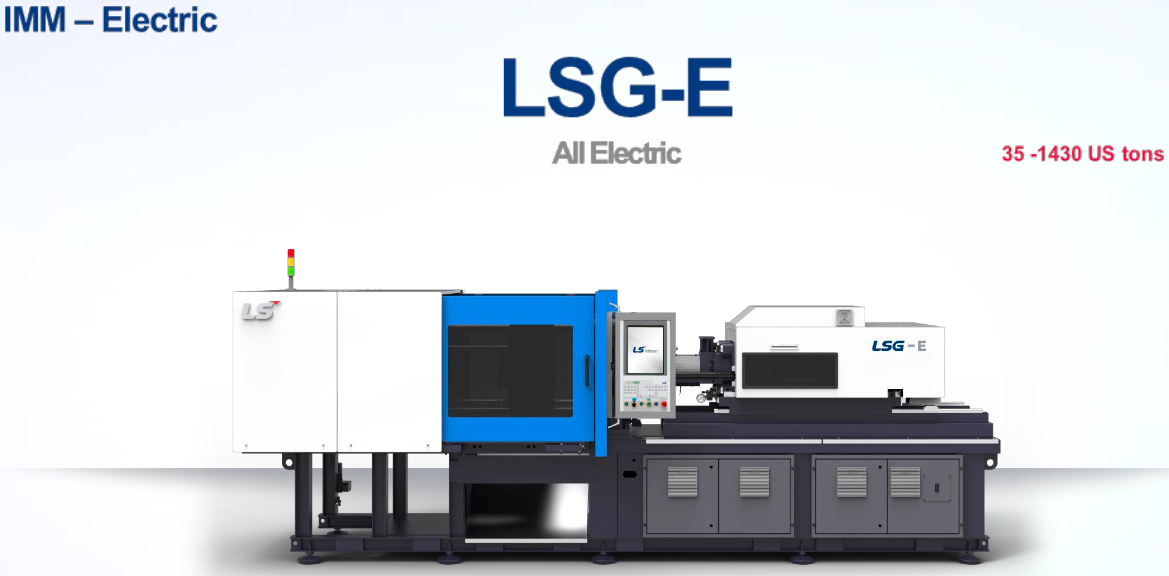
How to Choose the Best Injection Molding Machines: All-Electric vs. Hybrid vs. Vertical

Choosing an injection molding machine is a long-term production decision, not simply a choice between machine brands or purchase prices. The right machine can reduce cycle times, lower energy use, simplify labor, and prevent costly scrap. The wrong machine can limit your products, increase maintenance, and make future expansion more difficult.

The most important point to understand is that all-electric, hybrid, and vertical machines are not always direct substitutes. All-electric and hybrid describe the machine’s drive system. Vertical describes the machine’s layout and molding orientation. A vertical machine may use hydraulic, servo-hydraulic, hybrid, or electric technology.

At Hirate America, we help experienced manufacturers optimize existing production and guide new companies through complete turn-key projects. Here is a practical way to compare your options.

Quick Comparison: Which Machine Is Best for Your Application?

Machine type Main strengths Best-fit applications Key tradeoffs
All-electric High precision, fast response, lower energy use, clean operation High-volume, thin-wall, medical, electronics, packaging, and tight-tolerance parts Higher initial investment; tonnage and application availability must be confirmed
Hybrid Strong balance of performance, tonnage, cost, and energy efficiency General production, automotive, industrial parts, and larger components Still includes hydraulic components and related maintenance
Vertical Excellent insert molding, overmolding, ergonomics, and rotary-table integration Metal inserts, electrical connectors, automotive components, medical parts, and multi-material products Layout does not automatically mean faster or more energy efficient; drive type still matters

Hybrid premium injection molding machine

1. All-Electric Injection Molding Machines

All-electric machines use individual servo motors to control functions such as clamping, injection, screw recovery, and ejection. Instead of relying on a continuously running hydraulic pump, each motor operates when its specific movement is required.

Main advantages

Lower energy consumption:
All-electric machines can reduce energy use because the motors are not constantly circulating hydraulic oil during idle or cooling portions of the cycle. The actual savings depend on the material, mold, cycle, machine size, and production schedule, but the benefit becomes more significant as annual operating hours increase.

Shorter cycle times:
Independent servo motors allow machine movements to overlap. For example, screw recovery may begin while the mold is opening, depending on the process and machine controls. These simultaneous movements can increase parts-per-hour output.

High repeatability:
Closed-loop controls provide precise feedback on position, speed, and pressure. This can help maintain consistent shot size and part dimensions throughout a production run.

Reduced scrap:
Better process repeatability can reduce variation, short shots, flash, dimensional problems, and start-up waste. Scrap reduction is especially valuable when you process expensive engineering resins or produce parts with strict customer specifications.

Cleaner operation:
Because all-electric machines do not use hydraulic oil for machine motion, they eliminate hydraulic oil changes, leaks, and potential oil contamination from the molding cell. This can be an important consideration for medical, food packaging, electronics, and clean manufacturing environments.

Important tradeoffs

All-electric machines typically require a higher initial investment than conventional hydraulic equipment. You should also evaluate the availability of local technical support, spare parts, servo drive knowledge, and the machine’s suitability for your required clamp force and mold dimensions.

Best choice when: you run high annual hours, need high precision, want lower utility costs, or are producing large volumes of thin-wall or tight-tolerance parts. Hirate America’s electric injection molding machines are designed for manufacturers prioritizing energy efficiency, repeatability, and long-term production performance.

2. Hybrid Injection Molding Machines

Hybrid machines combine electric and hydraulic technologies. The exact configuration varies, but many use servo-driven pumps or electric control for selected functions while retaining hydraulic power for clamping or other high-force movements.

Main advantages

Balanced investment:
A hybrid machine can provide many efficiency benefits without the full capital premium of an all-electric machine. This makes it attractive when you need to control upfront spending while still improving operating costs.

Efficient hydraulic performance:
Servo-hydraulic systems can adjust pump output to match the machine’s actual demand. Compared with older fixed-pump hydraulic machines, this can reduce wasted energy and heat generation.

Strong large-machine capability:
Hybrid designs are often practical for applications requiring higher clamp forces. Hirate America’s hybrid product offerings include configurations for a wide range of production requirements, including larger industrial applications.

Flexibility:
A hybrid machine can be a strong general-purpose choice for manufacturers running multiple molds and part families. It may provide enough speed and precision for demanding work while retaining the force and familiarity of hydraulic systems.

Important tradeoffs

A hybrid machine still includes hydraulic components. You may still need to manage hydraulic oil, filters, seals, hoses, and potential leaks. Maintenance requirements are generally lower than with older hydraulic designs, but they are not eliminated.

The exact performance also depends heavily on the machine’s controls, servo-pump design, clamping system, injection unit, and application setup. Compare measured cycle data and energy estimates for your actual mold rather than relying only on general machine categories.

Best choice when: you need a practical balance between purchase price, energy savings, clamp force, and production flexibility. Review Hirate America’s hybrid molding machine solutions to see how hybrid technology may fit your production goals.

3. Vertical Injection Molding Machines

Vertical machines are selected primarily because of how they handle the mold, inserts, operator access, and automation, not simply because of their energy performance.

The vertical layout places the mold in a position that can make manual or automated insert placement easier. Gravity can help keep inserts in position, while rotary tables or multi-station designs can allow one station to mold while another station is being loaded or unloaded.

Vertical injection molding machine

Main advantages

Insert molding and overmolding:
Vertical machines are often an excellent fit for metal inserts, terminals, bushings, wires, and other components that must be positioned before injection.

Lower manual handling difficulty:
A well-designed vertical cell can make insert loading more accessible for operators. With proper tooling and automation, this can reduce unnecessary motion and support more consistent labor practices.

Flexible cell layouts:
Rotary-table machines can support multiple operations in one work area, including insert loading, molding, inspection, and part removal.

Potential scrap reduction:
Proper insert positioning, mold protection, vision inspection, and repeatable clamping can reduce misaligned inserts, damaged components, and incomplete overmolding.

Important tradeoffs

A vertical machine is not automatically faster or more energy efficient than a horizontal machine. Its cycle time and energy use depend on the drive system, machine controls, mold design, cooling, and process settings.

If your process relies heavily on manual insert loading, labor can remain a significant cost. In that case, evaluate the complete cell, including rotary tables, robots, sensors, conveyors, and poka-yoke features, not just the molding machine.

Best choice when: your product requires insert molding, overmolding, multi-station production, or easy operator access. Explore Hirate America’s vertical molding machines for vertical clamping, vertical injection, and combination configurations.

How to Compare Total Cost of Ownership

The lowest purchase price is not always the lowest-cost machine. Your total cost of ownership should include:

  • Machine purchase and installation
  • Mold and tooling requirements
  • Robots, conveyors, and end-of-arm tooling
  • Dryers, loaders, blenders, chillers, and temperature controllers
  • Electricity and cooling costs
  • Hydraulic oil, filters, lubrication, and maintenance
  • Operator labor and changeover time
  • Scrap, rework, and inspection costs
  • Planned and unplanned downtime
  • Training and technical support

A simple calculation can help you understand the investment:

Simple payback period = Additional machine investment ÷ Annual operating savings

For example, if an all-electric machine requires an additional $36,000 in investment but reduces energy, labor, and scrap costs by a measured $24,000 per year:

$36,000 ÷ $24,000 = 1.5 years, or 18 months

This is an illustrative calculation, not a guaranteed result. Your actual payback may be shorter or longer depending on production hours, electricity rates, part value, scrap rate, labor structure, and maintenance costs.

For a reliable comparison, ask suppliers to provide machine performance data based on your actual mold and material. A production trial or side-by-side energy measurement can be more useful than a brochure comparison.

Guidance for Existing Manufacturers

If you already operate a molding facility, start with your production data:

  1. Identify machines with the highest annual operating hours.
  2. Record current cycle time, parts per hour, scrap rate, and downtime.
  3. Measure actual energy consumption where possible.
  4. Review recurring maintenance costs and hydraulic issues.
  5. Separate high-volume production from occasional or low-volume work.
  6. Match each machine type to the part family it serves best.

You may not need to replace every machine with the same technology. A practical strategy could be to use all-electric machines for high-speed precision production, hybrids for larger or general-purpose work, and vertical machines for insert and overmolding applications.

Guidance for Building a Facility from the Ground Up

New manufacturers have an important advantage: you can design the entire production system before equipment is installed.

Start with the product, not the machine. Define:

  • Part size, weight, material, and tolerances
  • Required clamp force and shot capacity
  • Target cycle time and annual volume
  • Insert, overmolding, or automation requirements
  • Expected staffing and labor availability
  • Available electrical service and plant space
  • Cooling, drying, conveying, and material-handling needs
  • Future products and planned production growth

A new facility may require much more than an injection molding machine. Hirate America can help coordinate plastic process equipment, automation, molds, auxiliary systems, and production-line integration. This turn-key approach helps you avoid purchasing equipment that does not communicate correctly or cannot support your intended throughput.

Hirate America Turn Key Factory

The Bottom Line

Choose all-electric when precision, speed, cleanliness, high annual utilization, and long-term energy savings are priorities.

Choose hybrid when you need a balanced combination of investment cost, efficiency, flexibility, and higher clamp force.

Choose vertical when insert molding, overmolding, operator access, or rotary-table production is central to your product. Then select the drive technology, hydraulic, hybrid, or electric, that best supports your cycle time and cost targets.

The best answer is application-specific. At Hirate America, our specialists work with you to review the part, mold, material, production volume, automation, and auxiliary equipment before recommending a solution. As one customer shared:

“Their experience and knowledge, speed of delivery and quality of service we encountered throughout our project was simply world class. There is incredible peace of mind knowing that you’re in the hands of professionals.”

Whether you are upgrading one machine or building a complete facility, please get in touch with Hirate America. Big or small, we are always interested in helping with your upcoming project: and you should never hesitate to ask for guidance before making a major equipment investment.